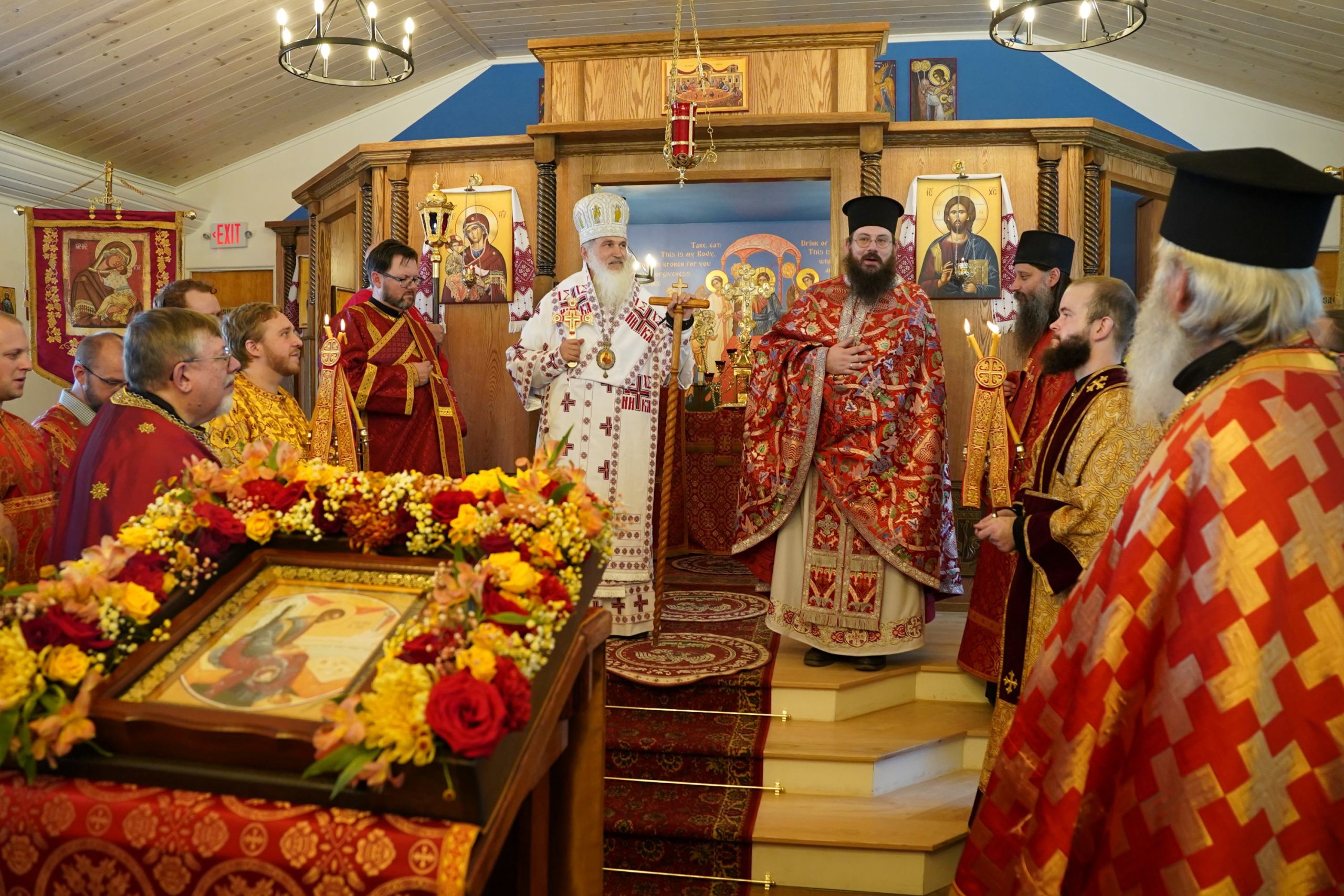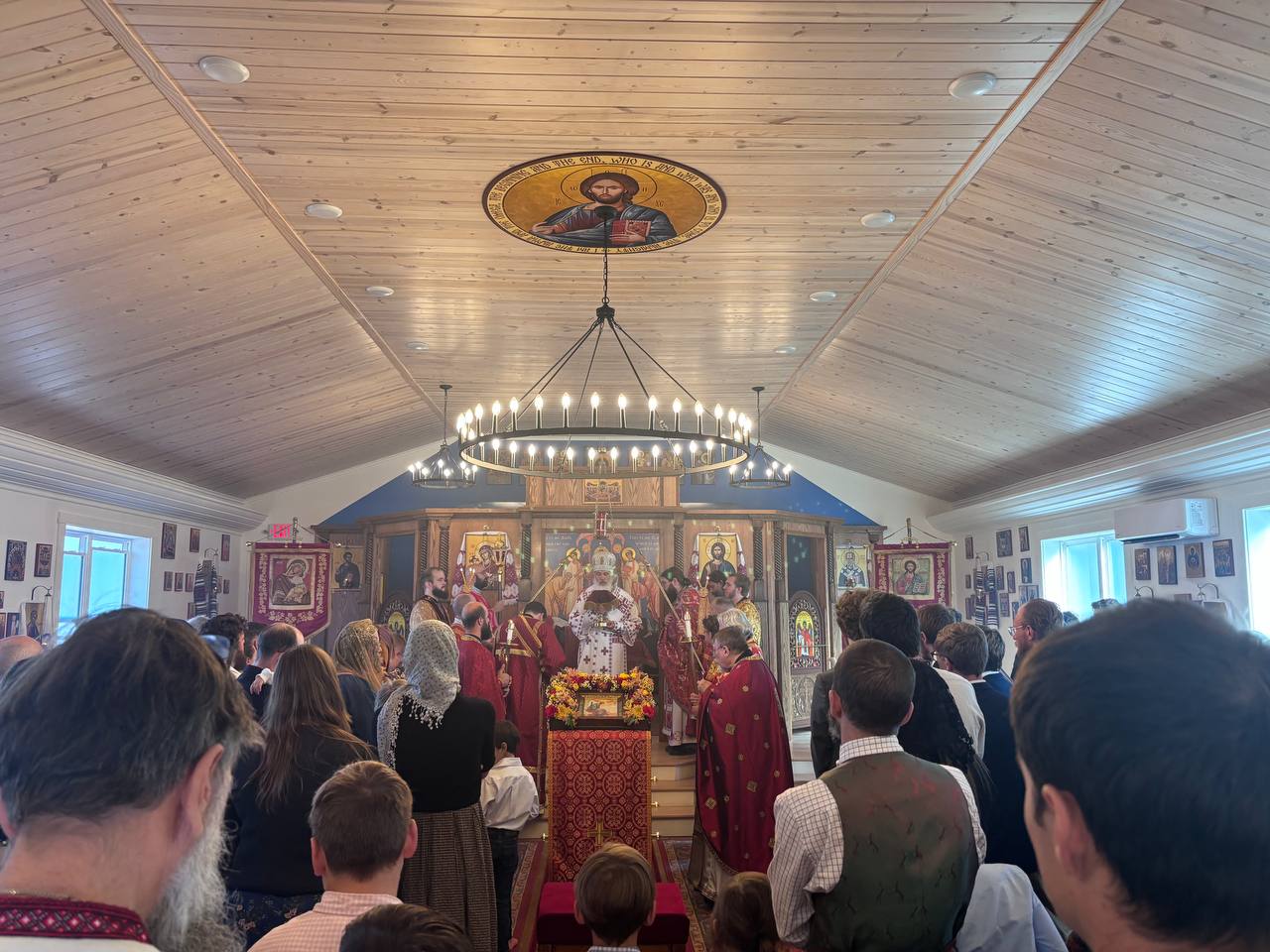
On Sunday 18 October 2026, an extraordinary and exceedingly joyful event took place in Saint Nicholas Ukrainian Catholic Eparchy. His Grace, Bishop +Benedict (Aleksiychuk) of Chicago visited the mission of Saint Luke the Apostle and Evangelist in Cody, Wyoming, USA, and not only presided over the celebration of their patronal feast, but also consecrated their new temple, elevated the community to a parish, and appointed as pastor their heretofore administrator, Fr. Philip Gilbert.
The community of Saint Luke Church is unique within the UGCC because it is comprised entirely of local Wyomingites and all of its liturgical services are served completely in English. In fact, the only Ukrainian speakers are the priest Fr. Philip Gilbert (who himself has no Ukrainian ancestry and learned to speak Ukrainian at the School of Ukrainian Language and Culture at Ukrainian Catholic University in Lviv, Ukraine) and his wife, whom he met while studying in Ukraine. The parish’s usual Sunday attendance is around 60 people, with half of them being young children.
The path towards founding a mission in Cody, Wy (which has a population of 10,000) began in the fall of 2021 when local Ukrainian Catholics, the grandchildren of immigrants, contacted the eparchy and requested a priest to serve them. Beginning in 2022, priests began to travel to Cody, WY on a monthly basis to serve the Divine Liturgy. In 2023 the community was formally established as a mission of St. Nicholas Eparchy and given the name Saint Luke. From that time, the community prayed in the spaces available to them: a local clubhouse and an old store building – spaces less than ideal for the liturgy and not in the center of town. On the morning of Pascha (5 April 2026), the announcement was made that very soon the community would move into a beautiful brick church building in the center of town. In May, through the joint efforts of the parishioners and Fr. Philip, work on the iconostasis began, and on Sunday, 14 June the first Divine Liturgy was celebrated in the new space. After that began work on a million little projects and the purchasing of ecclesiastical furniture, icons, linens and other essential items to arrange and decorate the space, turn it into a real church, and make it ready for the consecration. This was all made possible through the charity and generosity of benefactors.
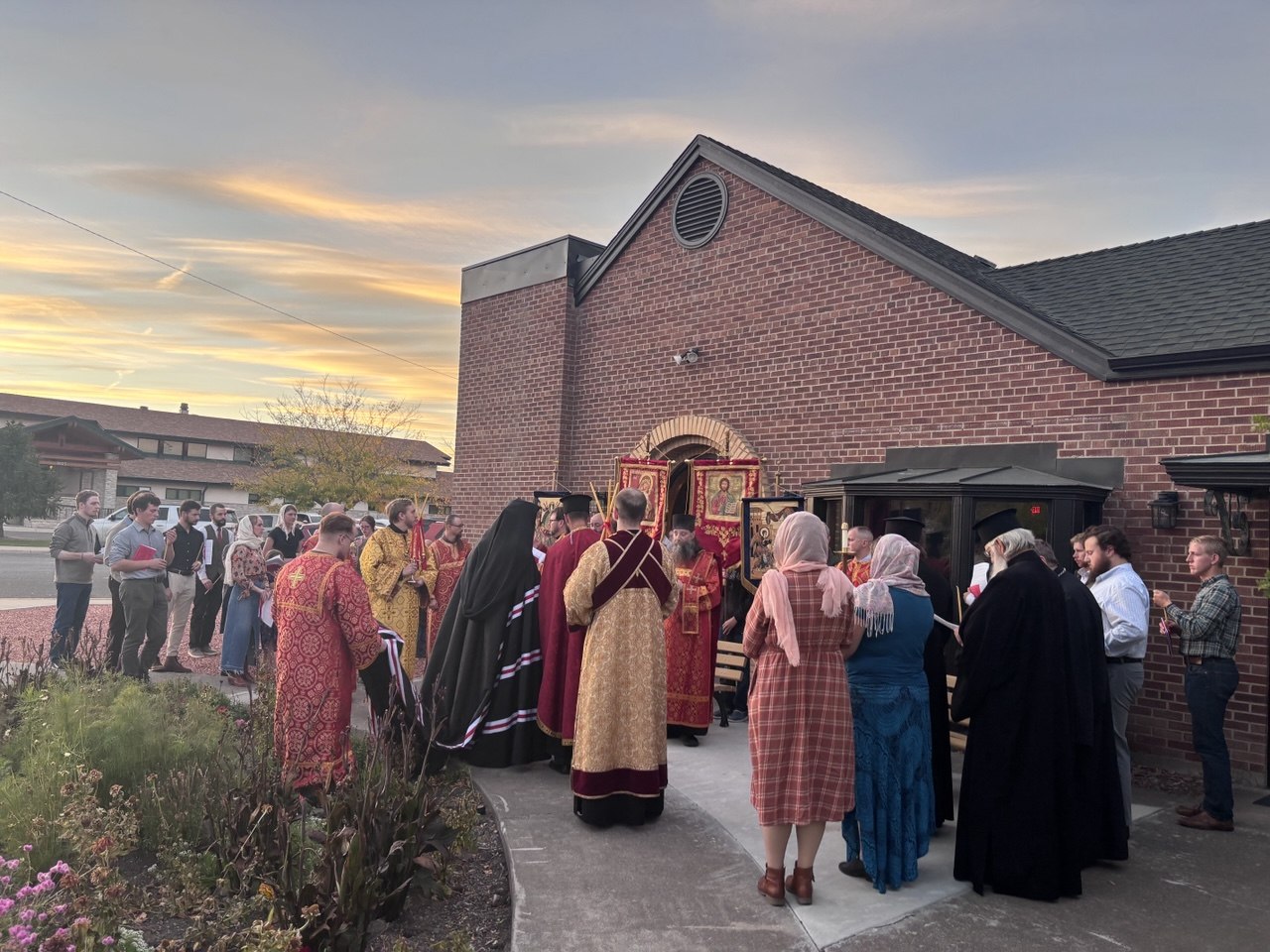
The celebratory weekend began on Saturday evening with the arrival and greeting of the bishop at the doors of the church and his presiding over the service of All-Night Vigil, that is, 9th Hour, Vespers with lytia, Matins, and 1st Hour, which, despite its name, lasted only four hours. Those familiar with the Byzantine tradition may notice, and find it odd, that the entire service was celebrated without going through the iconostasis or entering the sanctuary. This is one of the peculiarities of the vigil for consecrating a church: since the sanctuary and altar are unconsecrated, the doors and curtain remain closed and the space is not used.
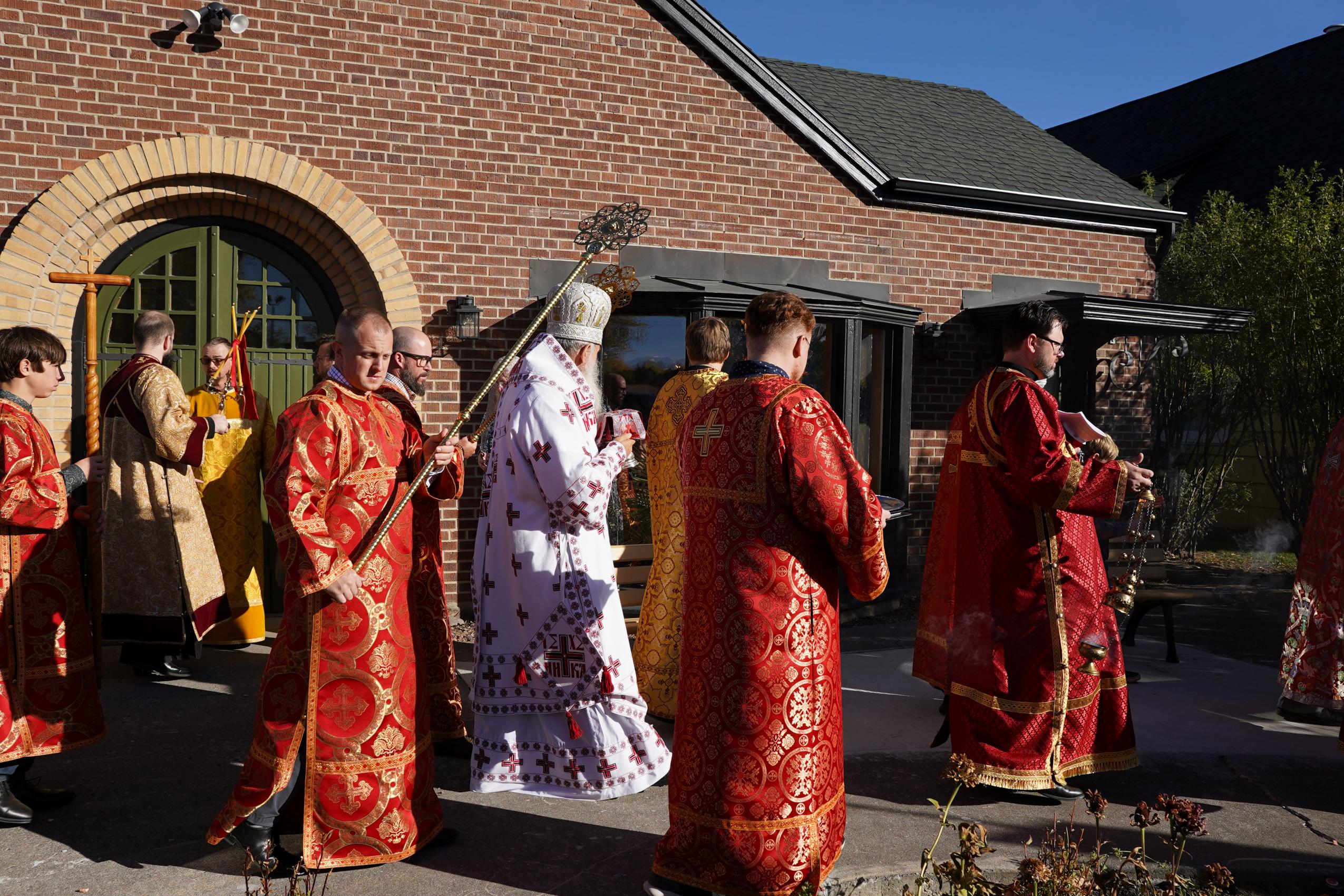
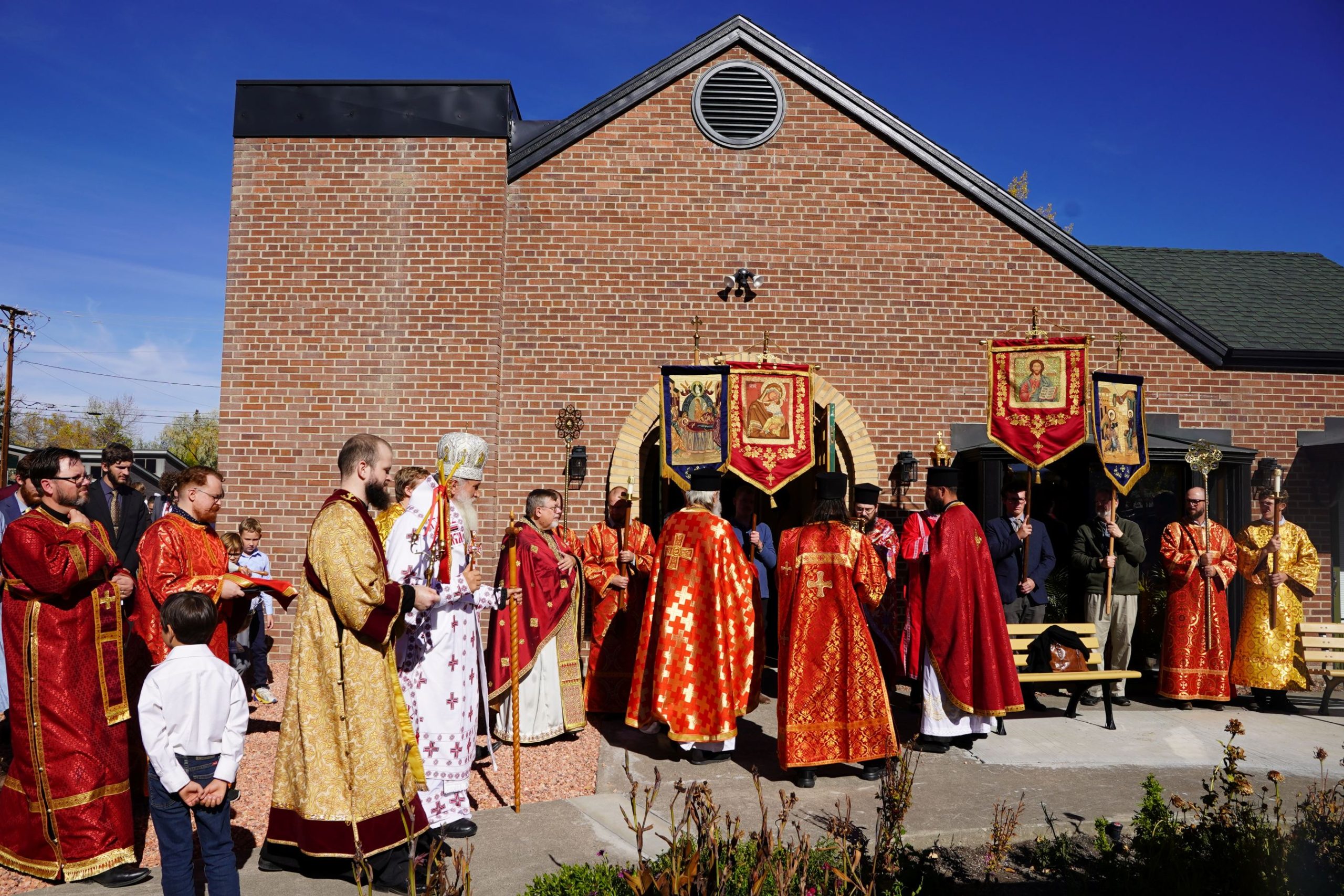
On Sunday morning, Bishop +Benedict was solemnly met at the doors of the church by the parishioners catechumens, holding the traditional bread and salt. Upon entering, he was solemnly vested in his episcopal vestments, the doors of the sanctuary were opened, and then the clergy entered the holy place and the consecration commenced. Bishop +Benedict wrote on his Facebook page: “The order of consecrating ecclesiastical buildings is done similarly to the Mysteries of Baptism and Chrismation of a person. As a child is born unto spiritual life through immersion and washing and the anointing with Holy Myron (Chrism), so through washing and the anointing with Myron a building is transformed and truly becomes ‘the House of God.’ Glory to God that we now have one more place on earth where prayer will sound and the Lord will be glorified!”
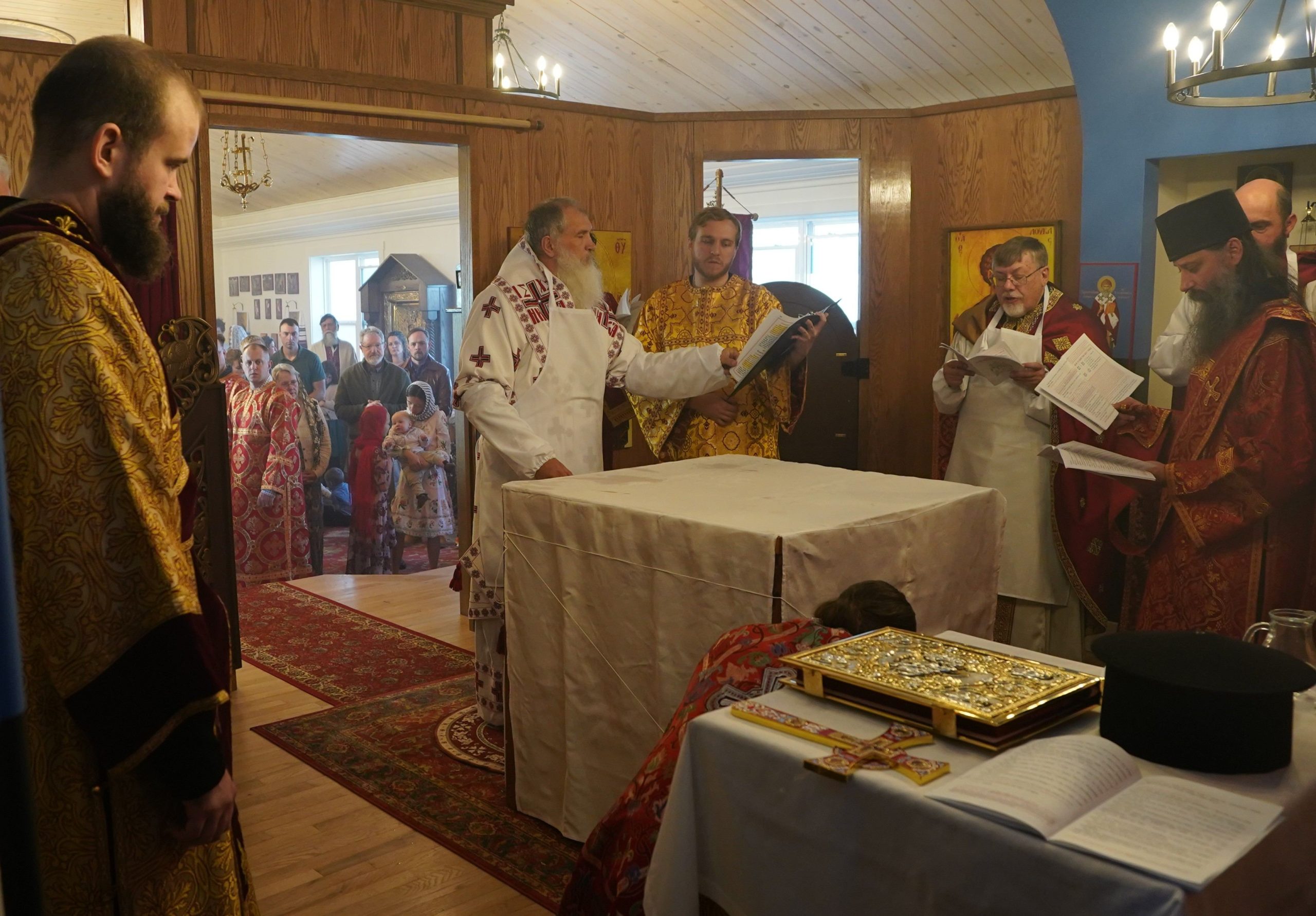
The first step of the consecration is the “establishment of the Holy Table,” many parts of which are symbolic of the preparation of Christ’s body for burial. First, hot wax-mastic is poured on the posts of the altar, and the top is placed on it and permanently affixed by pounding in pegs or spikes with stones. The altar is washed with fragrant soap and water, wiped dry, and then anointed with wine, rosewater, and spikenard as a body would be washed and anointed. After this, it is anointed with Holy Chrism, as as a person is anointed after baptism, and then vested: first in the white linen katasarka (the baptismal garment and burial shroud), which is permanently bound on with cord, then in the colored vestment fabrics we are accustomed to seeing. The antimension, holy Cross, tabernacle, book of the Gospels, and 7-branch candlestick are placed on the altar, and then the entire church is incensed, sprinkled with holy water and anointed with Chrism. The hierarch lights a new lamp is lit and hung in the sanctuary to burn perpetually, signifying the holiness of the Lord’s temple. Finally, there is a procession to retrieve the holy relics of a martyr, in this case of the holy hieromartyr Josaphat, archbishop of Polotsk, and they are sealed in a capsule with the hot wax-mastic and placed into the central post of the Holy Table.
At the end of the Divine Liturgy, a festal procession was held in honor of the temple’s patronal feast, with a reading from the Gospel on each side of the church. Afterwards, the decrees proclaiming the consecration of the altar and temple, the establishment of the community as a parish, and the appointment of the pastor were solemnly read.
The services were concelebrated by: Rev. Philip Gilbert, pastor of St Luke Church in Cody, Wy; Rev. David Anderson, chaplain of Wyoming Catholic College in Lander, Wy; Rev. Martin Nagy, of St. Michael UGCC in Tuscon, Az; Rev Augustine Lewton, of Ss. Peter and Paul UGCC Mission in Kalispell, Mt; Hierodeacon Paisii (Firman) of Holy Resurrection Monastery in St Nazianz, WI; and, Rev. Deacon Kyle Washut, president of Wyoming Catholic College. The Byzantine Student Choir of Wyoming Catholic College beautifully sang the responses of the consecration and Divine Liturgy. Around 150 people were present for the Sunday morning services.
Now the parishioners of Saint Luke Church and all the Greek-Catholics in the state of Wyoming have a place to call their spiritual home, where the Gospel is shared and the Lord is praised for all His blessings. Glory to God for all things!